

Award-winning Investigative Journalist Robert Parry (1949-2018)
Award-winning investigative journalist and founder/editor of ConsortiumNews.com, Robert Parry has passed away. His ground-breaking work uncovering Reagan-era dirty wars in Central America and many other illegal and immoral policies conducted by successive administrations and U.S. intelligence agencies, stands as an inspiration to all in journalists working in the public interest.
Robert had been a regular guest on our Between The Lines and Counterpoint radio shows -- and many other progressive outlets across the U.S. over four decades.
His penetrating analysis of U.S. foreign policy and international conflicts will be sorely missed, and not easily replaced. His son Nat Parry writes a tribute to his father: Robert Parry’s Legacy and the Future of Consortiumnews.
Thank you for donating
If you've made a donation and wish to receive thank you gifts for your donation, be sure to send us your mailing address via our Contact form.
See our thank you gifts for your donation.
The Resistance Starts Now!
Between The Lines' coverage and resource compilation of the Resistance Movement
- "The man who predicted Trump presidential win now says Trump impeachment could happen," AM Joy with Joy Reid, MSNBC, Jan. 21, 2018
- "Sketchy Kazakh money finds its way into Trump dealings," The Rachel Maddow Show, MSNBC, Jan. 15, 2018
- "Red flags seen in many Trump real estate deals," The Rachel Maddow Show, MSNBC, Jan. 15, 2018
- "Secret Money: How Trump Made Millions Selling Condos To Unknown Buyers," BuzzFeed, Jan. 12, 2018
- "The Scandals of Donald Trump: Presidential Edition," The Atlantic, May 15, 2017
- "Here's what we know so far about Team Trump's ties to Russian interests," Washington Post's ongoing compilation
- "What Comey Was Investigating, Explained," The Moscow Project, Center for American Progress
- "Donald Trump's Financial Ties to Russian Oligarchs and Mobsters Detailed In Explosive New Documentary from the Netherlands," Dutch TV documentary, Alternet.org, May 12, 2017
- Ongoing compilation of Trump's creeping authoritarianism," MotherJones.com
- Full resource list ...
SPECIAL REPORT: "The Resistance - Women's March 2018 - Hartford, Connecticut" Jan. 20, 2018
Selected speeches from the Women's March in Hartford, Connecticut 2018, recorded and produced by Scott Harris

SPECIAL REPORT: "No Fracking Waste in CT!" Jan. 14, 2018
- Jen Siskind Jennifer Siskind, local coordinator for Food and Water Watch, describes the campaign to stop fracking waste in Connecticut, which so far has led to fracking waste bans in 34 towns around the state.
Interviewed by Richard Hill on Mic Check, WPKN Radio, Bridgeport, CT
SPECIAL REPORT: "Resistance Round Table: The Unraveling Continues..." Jan. 13, 2018
- Lindsay Kanaly
The panel discusses Trump's long history of racism and the Republican voter suppression juggernaut confronting Democrats leading up to the 2018 elections. Special guest: Lindsay Kanaly, a lead organizer of the Women's Marches planned for Jan. 20, 2018. Panel: Scott Harris, Ruthanne Baumgartner and Richard Hill on Resistance Roundtable, WPKN Radio, Bridgeport, CT.

SPECIAL REPORT: "Capitalism to the ash heap?" Richard Wolff, Jan. 2, 2018
- Richard Wolff,
Economics professor Richard Wolff declares U.S. capitalism to be beyond repair and
suggests the need for a radical alternative. Interviewed by Richard Hill

SPECIAL REPORT: Maryn McKenna, author of "Big Chicken", Dec. 7, 2017
- Maryn McKenna, investigative journalist and author of Big Chicken, talks about the widespread use and dangers of antibiotics in commercial poultry, beef and fruit production. Interview by Bill Duesing, Richard Hill and Guy Beardsly on WPKN's Organic Farm Stand.

SPECIAL REPORT: Nina Turner's address, Working Families Party Awards Banquet, Dec. 14, 2017
- Nina Turner, president of Our Revolution, talks about the fight ahead for progressives as she receives the Working Families Organization Award for Exceptional Leadership Towards Advancing Progress. The event was held in Meriden, CT.
Produced by Richard Hill.
SPECIAL REPORT: Mic Check, Dec. 12, 2017
- Working Families Party of CT talks strategy and issues for 2018.
Lindsay Farrell, executive director of the Working Families Party of Connecticut, discusses the state's electoral landscape and lays out the issues and strategies that could lead to progressive victories in 2018. Interviewed by Richard Hill.
SPECIAL REPORT: Resistance Roundtable, Dec. 9, 2017
- Disturbing developments in the Trump/Republican Agenda
Focus on the tax bill, destruction of our public lands, North Korea and Trump's private CIA. Panel: Scott Harris, Ruthanne Baumgartner and Richard Hill. Special guest: Jo Macallero of Rise and Resist.

SPECIAL REPORT: On Tyranny - one year later, Nov. 28, 2017
- Professor Timothy Snyder, author of the highly acclaimed resistance manual On Tyranny, discusses his book and offers a fresh assessment of the state of our beleaguered republic. Timothy Snyder, history professor at Yale, is introduced by Stanley Heller, administrator of Promoting Enduring Peace, a Connecticut-based organization that sponsored this event at the United Church Parish House in New Haven on Nov. 28. A brief interview with Snyder conducted by WPKN radio producer, Richard Hill, follows his talk.
SPECIAL REPORT: Mic Check, Nov. 12, 2017
- Lynne Ide, director of program and policy with the Universal Health Care Foundation of Connecticut, talks about the current state of health care coverage in Connecticut. Interviewed by Richard Hill, WPKN radio producer
SPECIAL REPORT: Resistance Roundtable, Nov. 11, 2017
- Focus on the Republican tax plan, the just-released autopsy on the Democratic Party, and Internet censorship by Google, Facebook and Youtube. Including an interview with Hilary Grant, a lead organizer with Action Together Connecticut, who discusses the local results of the recent election, with hosts Richard Hill, Scott Harris and Ruth Baumgartner WPKN producers
SPECIAL REPORT: Rainy Day Radio, Nov. 7, 2017
- Two leaders from Redneck Revolt, an anti-racist, anti-capitalist movement, talk about their work organizing with white working class people in Suffolk County, New York. Interviewed by Richard Hill, WPKN radio producer
SPECIAL REPORT: Rainy Day Radio, Nov. 7, 2017
- Bruce Gagnon, coordinator for the Global Network Against Weapons and Nuclear Power in Space, describes the extent of -- and motives underlying -- the vast US network of military bases around the globe. Interviewed by Richard Hill, WPKN radio producer

SPECIAL REPORT: Resisting U.S. JeJu Island military base in South Korea, Oct. 24, 2017
- Joyakol, South Korean peace activist and singer, discusses the crisis on the Korean peninsula and focuses on the resistance to the U.S. huge military base being constructed on Jeju Island. The event was sponsored by the Greater New Haven Peace Council and this audio was recorded by Richard Hill, WPKN producer.
- Joyakol discusses Americans' biggest misconceptions about the conflict between North and South Korea and the U.S., Interview by Richard Hill, WPKN producer.

SPECIAL REPORT: John Allen, Out in New Haven
- John Allen, founding director of the New Haven Pride Center, Connecticut, talks about his new LGBTQ television show, Out in New Haven, which presents a range of political and cultural issues to the community. Interviewed by Richard Hill on WPKN's Rainy Day Tuesday, Jan. 2, 2018.
2017 Gandhi Peace Awards

Promoting Enduring Peace presented its Gandhi Peace Award jointly to renowned consumer advocate Ralph Nader and BDS founder Omar Barghouti on April 23, 2017.
Subscribe to our Weekly Summary & receive our FREE Resist Trump window cling
 (Car window cling)
Email us with your mailing address at contact@btlonline.org to receive our "Resist Trump/Resist Hate" car window cling!
THANK YOU TO EVERYONE...
who helped make our 25th anniversary with Jeremy Scahill a success!
For those who missed the event, or were there and really wanted to fully absorb its import, here it is in video
Jeremy Scahill keynote speech, part 1 from PROUDEYEMEDIA on Vimeo.
Jeremy Scahill keynote speech, part 2 from PROUDEYEMEDIA on Vimeo.
Between The Lines on Stitcher

Between The Lines Presentation at the Left Forum 2016

"How Do We Build A Mass Movement to Reverse Runaway Inequality?" with Les Leopold, author of "Runaway Inequality: An Activist's Guide to Economic Justice,"May 22, 2016, John Jay College of Criminal Justice, The City University of New York, 860 11th Ave. (Between 58th and 59th), New York City. Between The Lines' Scott Harris and Richard Hill moderated this workshop. Listen to the audio/slideshows and more from this workshop.
Listen to audio of the plenary sessions from the weekend.
JEREMY SCAHILL: Oscar-nominated documentary filmmaker "Dirty Wars"
Listen to the full interview (30:33) with Jeremy Scahill, an award-winning investigative journalist with the Nation Magazine, correspondent for Democracy Now! and author of the bestselling book, "Blackwater: The Rise of the World's Most Powerful Mercenary Army," about America's outsourcing of its military. In an exclusive interview with Counterpoint's Scott Harris on Sept. 16, 2013, Scahill talks about his latest book, "Dirty Wars, The World is a Battlefield," also made into a documentary film under the same title, and was nominated Dec. 5, 2013 for an Academy Award in the Best Documentary Feature category.
Listen to Scott Harris Live on WPKN Radio
Between The Lines' Executive Producer Scott Harris hosts a live,
weekly talk show,
Counterpoint, from which some of Between The Lines'
interviews are excerpted. Listen every Monday evening from 8 to 10 p.m.
EDT at www.WPKN.org
(Follows the 5-7 minute White Rose Calendar.)
Counterpoint in its entirety is archived after midnight ET
Monday nights,
and is available for at least a year following broadcast in
WPKN Radio's Archives.
You can also listen to
full unedited interview segments from Counterpoint, which
are generally available some time the day following broadcast.
Subscribe to Counterpoint bulletins via our subscriptions page.
 BTL Blog
[an error occurred while processing this directive]
 Special Programming
[an error occurred while processing this directive]
Progressive Resources
A compilation of activist and news sites with a progressive point of view
 Subscribe to BTL
Podcasts: direct or via iTunes
Subscribe to Program Summaries, Interview Transcripts or Counterpoint via email or RSS feed
If you have other questions regarding subscriptions, feeds or podcasts/mp3s go to our Audio Help page.
Stay connected to BTL


Learn how to support our efforts!
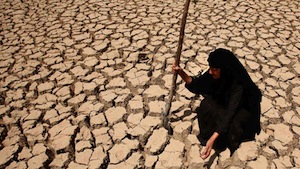
Dams Along Tigris and Euphrates Rivers Create Water Crisis in Iraq
 RealAudio
 MP3
MP3Posted Dec. 11, 2013
Excerpt of speech by Johanna Rivera, coordinator of Save the Tigris Campaign, recorded and produced by Melinda Tuhus
Johanna Rivera is a former pharmacy graduate student. In 2010, she decided to postpone her Ph.D. dissertation and travel to Israel/Palestine, where she worked for the Tent of Nations, the Palestine Solidarity Project in Palestine and the Kayan Feminist Organization. Rivera then moved to the Kurdistan region of Iraq, where she worked on human rights issues ranging from violence against women, honor killings, internally displaced Camps, and most recently she has been working across Iraq and internationally in an advocacy campaign to protect the Tigris River from dams upstream in Turkey and Iran. Rivera, now coordinator of Iraq’s Save the Tigris Campaign, has traveled to Tunisia, Turkey and Jordan to talk about the need to protect water rights and the social, cultural and environmental heritage of Mesopotamia.
She recently spoke at the New Haven, Conn. public library in a program titled, "Iraq: Ten Years After Shock and Awe," sponsored by the Middle East Crisis Committee. In this excerpt of Rivera’s Dec. 4 talk, she addresses the problem of water shortages, especially for the people of the marshes in southern Iraq. Former dictator Saddam Hussein drained the marshes in the early 1990s to force the Shia marsh dwellers to leave their land, but they are now returning to their former home under the current Shiite-led government. However, they are still threatened by dam projects initiated by Turkey, along both the Tigris and Euphrates rivers, where there are 22 dams so far and more planned.
JOHANNA RIVERA: Iraq is fed from the Euphrates and the Tigris. There have been nine dams already built, mostly on the Euphrates, and they say the flow on the Euphrates has decreased up to 80 percent. And this, of course, affects agriculture and affects the marshes, which were in the process of restoration. The marshes are also proposed as a World Heritage site, but this is based on there is enough water to keep them alive. The marshes are a unique ecosystem, both culturally and naturally. It hosts a lot of biodiversity and endangered species that only live in that area. And think about the repercussions of not having water in Iraq – more conflicts for water. They were talking about Syria speeding up the civil war because of resources and because of water. There was a big drought between 2007 and 2009. People migrated to the big cities; there was not enough accommodations or enough jobs. So the same will happen in Iraq. This area of the marshes is said to be the place of the Garden of Eden, so it has a lot of historical and cultural value for the people. The people that live there, they depend totally on the ecosystem. They depend on water. They build from reed their houses; they feed their animals, their water buffaloes from the reed. And these people were displaced; 500,000 people were displaced during the Iran-Iraq War, and after the drainage of the marshes. Some of them have come back, but if they are going to have water issues ... and now we have seen that some of the farmers and some of the fishermen have been migrated up where there is more water, so it's already causing a resource struggle.
So what we've been doing in the campaign, is that because the Ilisu Dam is built in Turkey, we have contacted the people in Turkey, the Turkish activists who've been fighting against the dam, because in Turkey it's also going to flood a potential World Heritage site, the city of Hasan Kef, it's a small village but it has history back 12,000 years – a lot of archaeological sites, it's the birthplace of the Tigris Valley, a lot of endangered species also, birds, fish. So we've been in contact with them and have been trying to build a coalition, let's say, to raise awareness of the dangers in Turkey but also in Iraq, because the Iraqi government has been very silent about this issue. There have been negotiations but Turkey, you know; it's the upstream state so they have the upper hand. They can decide what to do because the waters are born in their territory. So for them, they consider as long as the water in their territory, they can develop the river as they want.
International law, which is something we've been working with – international conventions say if there is a transboundary river, you need a transboundary impact assessment to see what are the impacts downstream. That hasn't happened yet. Turkey hasn't had an evaluation of the impacts in Iraq. And you have to have prior consultation. You have to tell the people that you're going to do this, and you have to negotiate, and that hasn't happened yet. So we've been trying to raise awareness from the Iraqi citizens so they can demand their government work on this issue. So it's also an issue of governance; weak governance in Iraq, corruption, lack of institutions that are strong enough. The Ministry of Environment, the Ministry of Water Resources, and they say it's the other ministries; the other ministries say it's the Parliament. The Kurds say it's the Arabs, you know, it's Baghdad that has to deal with it. On the other hand, they have very good relations with Turkey, and they will be the upstream state when it comes inside Iraq because Kurdistan is an autonomous region. So it's international repercussions, it's national repercussions, and then provinces – how they will divide the water.
So we've been doing a lot of work inside Iraq in different provinces, especially in the south – Amara, Basra, Missan, Nasiriya, where the marshes are – raising awareness because the people know what the problem is but they don't know how to solve it. They think it's the government; they cannot do anything. They say, "It's Turkey." They don't even say it's Iraq. "Turkey – they want to build this dam. What can we do?" We say, like, "You can do something. You're not alone," so that's also why we were in Tunis trying to connect with movements at the international level. We had a session with people from India. They had a lot of experience with a big dam – the Narmanda project in the 1990s that was a big, big controversy. The World Bank removed the funds. So we heard from them. We had people from Peru, from Mexico; we had our colleagues from Turkey and then I was speaking about Iraq. So it was very good to exchange ideas on how people have fought this issue in other countries.
Johanna Rivera's talk in New Haven was recorded and produced by Between The Lines’ Melinda Tuhus. Find more information on water issues in Iraq and Rivera’s advocacy work by visiting http://www.iraqicivilsociety.org.
Related Links:
- "A Journey Deep into the Struggle," blog by Johanna Rivera
- "Save the Tigris Campaign holds successful seminars in four South Iraq Province," Iraqi Civil Society Solidarity Initiative, July 8, 2013
- International Activist meet in Baghdad to Discuss Legal Strategies to Protect the Tigris River Iraqi Civil Society Solidarity Initiative, Sept. 26, 2013
Home | History | Staff | Broadcast-Quality MP3s | Station Information | Audio Archives | Audio Help | Transcripts |
© Squeaky Wheel Productions 2017 | Design: no left turn | Site Architecture: